Car rental in Paris France is one of those topics where the honest answer depends on what you plan to do after you leave the city. I have rented cars in Paris five times over the past decade, and twice I regretted it. The other three trips, a car saved my vacation. So rather than pretend there is one universal answer, I will walk you through real prices, the paperwork that trips people up, and the situations where a car genuinely earns its cost.
How Much Does Renting a Car in Paris Actually Cost?
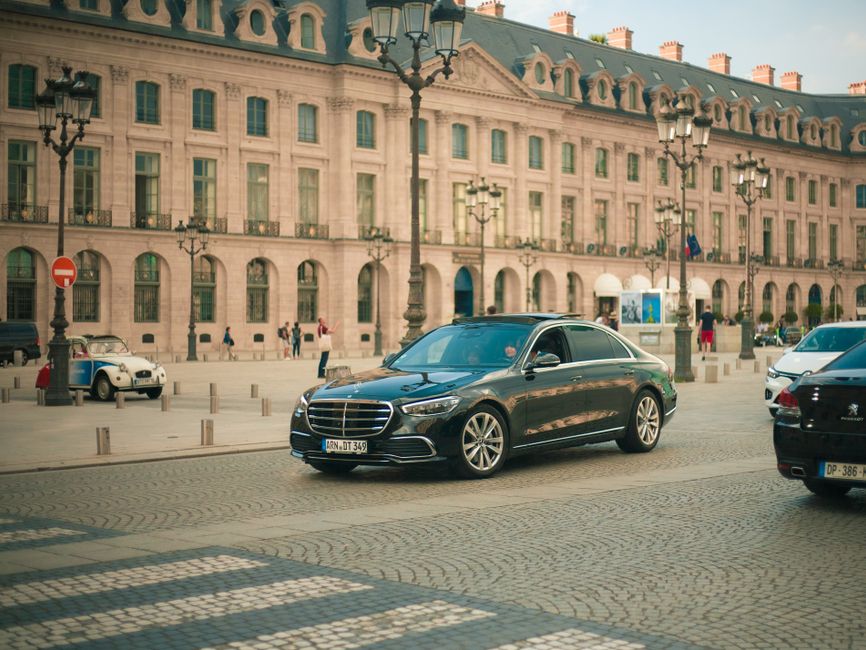
Budget about 30 to 55 euros a day for a compact car like a Renault Clio or Peugeot 208 if you book two to three weeks ahead. Book last minute in July and that same car can jump to 80 or 90 euros. Automatics cost noticeably more, usually 65 to 100 euros per day, because France runs on manual gearboxes and automatic fleet supply is thin.
One-way fees deserve a warning. Picking up at CDG Airport and dropping in Nice often adds 150 to 300 euros, sometimes more. I once paid 240 euros for that exact route in 2022 and it still stings. If your trip loops back to Paris, drop the car where you got it and save the money.
Fuel runs around 1.75 to 1.90 euros per liter for petrol as of early 2025, so a full tank
 in a compact costs roughly 75 to 85 euros. Most rentals are full-to-full, which is the policy you want. Refuse prepaid fuel schemes at the counter. They are almost always a worse deal.
Where Should You Pick Up Your Rental Car?
The single best advice I can give: do not pick up a car in central Paris. The city has the périphérique ring road, aggressive scooter traffic, and parking that costs 2 to 4 euros per hour in many arrondissements. I have watched friends spend 45 minutes circling the Marais looking for a space wide enough for a Peugeot 2008. That is not a vacation.
- Paris Charles de Gaulle (CDG): every major brand, open roughly 6:30 am to 11 pm, about 45 minutes from the center. Best if you land and leave the city immediately.
- Paris Orly (ORY): slightly cheaper rates than CDG on average, 30 to 40 minutes from central Paris.
- Gare du Nord or Gare de Lyon: handy if you arrive by train and want the car later in your trip. Smaller counters, shorter queues, but tighter opening hours.
- Suburban agencies in Issy, Vincennes, or Saint-Denis: often 10 to 20 percent cheaper than airport rates. Worth checking if you are comfortable taking a metro ride first.
Do You Even Need a Car in Paris Itself?
Short answer, no. The Métro covers the whole city, a carnet of ten tickets costs about 19 euros, and traffic on the Champs-Élysées moves at walking pace most afternoons. Since 2021 Paris has also been steadily removing parking and adding bike lanes under its urban mobility plan, which makes driving less pleasant every single year. Mayor Anne Hidalgo’s administration is not subtle about its priorities, and drivers are not one of them.
Where a car starts making sense: Normandy day trips to Giverny or Rouen (roughly 1 to 1.5 hours away), the Loire Valley châteaux, Champagne country around Reims and Épernay, and Brittany. Trains reach some of these places, but not the small villages between them. That is where the rental pays for itself. My favorite loop so far was Paris to Honfleur to Étretat over three days, maybe 400 euros all-in with fuel and tolls, and unreachable by train without two changes each way.
What Documents and Rules Do You Need to Know?
Paperwork
You need your passport, a valid driver’s license held for at least one or two years depending on the company, and a credit card in the driver’s name. That last one catches people out. Debit cards are refused by many agencies, and prepaid cards are refused by nearly all of them. Non-EU licenses are accepted, though an International Driving Permit is officially recommended if your license is not in French or English.
The French Driving Rules That Matter
- The speed limits are 50 km/h in towns, 80 km/h on rural roads (reduced from 90 in 2018, controversially), and 130 km/h on motorways, or 110 when it rains.
- Every car must carry a reflective vest and warning triangle. Rentals include these, but check.
- France has lowered many city limits to 30 km/h, including large parts of central Paris since 2021.
- Priority to the right still exists on unmarked intersections in older areas. Be alert.
Speed Cameras and the Crit’Air Sticker
France has thousands of fixed speed cameras and they mail fines to rental companies, who then charge your card plus an admin fee of 25 to 45 euros. The fee annoys me more than the fine itself. Separately, if you plan to drive into Paris or Lyon low-emission zones (ZFE) with an older car, you need a Crit’Air vignette, a sticker costing about 4.90 euros that classifies your vehicle’s emissions. Most modern rentals qualify for the green categories, but confirm at the counter if you will enter the city.
Which Rental Companies and Insurance Options Are Worth It?
Sixt, Hertz, Europcar, and Avis have the biggest CDG presence. For cheaper rates, look at French and European brands like Rent A Car, Goldcar, or the broker sites Auto Europe and Rentalcars, which bundle inventory. I have had good luck with Sixt at Gare du Lyon and one genuinely miserable experience with a budget broker at Orly that took 90 minutes and a worn clutch. You get what you pay for sometimes.
On insurance, the counter upsell is where money leaks. The collision damage waiver sold at the desk can run 15 to 25 euros per day, which is absurd. Your credit card may already include rental coverage (many premium cards do), and standalone excess insurance from providers like iCarhireinsurance or Insurance4CarHire costs around 40 euros a year. Check your card’s terms before you fly. Declining the desk coverage with a card that has primary coverage saved me roughly 200 euros on a ten-day Normandy trip.
The Deposit Question
Expect a hold of 200 to 400 euros on your credit card, more for premium cars. The block takes one to two weeks to release after you return the car clean and on time. This is normal, but plan for it in your travel budget so it does not wreck your available credit mid-trip.
Paris Driving Mistakes I Made So You Do Not Have To
Here are my scars, passed on freely. I once picked up a car at a desk inside central Paris at 5 pm on a Friday, in August. Even with half the city on holiday, the périphérique was gridlock and it took me an hour to travel what the RER covers in 12 minutes. Another time I returned a car with the tank nine-tenths full because the nearest station near Orly was closed, and the agency charged me for a full tank at their rate, about 1.25 times the pump price. Refuel well before you arrive at the airport, at a station you can see is open.
Also photograph the car from every angle before you drive off, including the roof and the wheels. That habit has gotten me out of two damage disputes with Europcar and a smaller French agency. It takes four minutes and saves hours of email chains.
What About Tolls and Parking Outside Paris?
French motorways (the ones with A numbers) are tolled. Expect roughly 0.10 to 0.12 euros per kilometer. A Paris to Bordeaux run costs around 60 euros each way in tolls. You can avoid them by taking the D and N roads, which are prettier and free, but slower. For a Normandy or Loire trip, honestly, the free roads are part of the charm.
Parking outside Paris is usually manageable. Rouen, Caen, and Amiens all have underground garages at 12 to 18 euros per day. Rural areas are free or a couple of euros. In Paris itself, if you must, use an underground garage like the one at Opéra or République, around 30 to 40 euros per day, rather than street parking with the Zone app and hourly meters.
Quick Comparison: Car vs. Train for Popular Trips
| Destination | Car (fuel + tolls, one way) | Train from Paris |
|---|---|---|
| Giverny + Rouen (day trip) | ~30 to 40 euros | ~15 to 30 euros per person |
| Reims (Champagne) | ~25 euros + parking | ~15 to 25 euros per person, 45 min TGV |
| Loire Valley châteaux loop | ~45 euros, 3 days of flexibility | Trains reach Tours, but châteaux need buses |
| Étretat / Honfleur | ~50 euros | Multiple changes, 3+ hours |
Read that table honestly. Two people going to Reims should take the train. A family of four doing a Loire château circuit should rent the car. Solo travelers almost never need one unless they are chasing villages.
Final Takeaway
Book two to three weeks ahead, pick up at CDG, Orly, or a suburban agency rather than central Paris, pay with a credit card that covers rental damage, and refuel far from the drop-off point. Do that, and car rental in Paris France goes from a common vacation headache to a genuinely good tool for seeing the France most visitors miss. If your itinerary stays inside the Périphérique, take the Métro and spend the savings on a better dinner.