I have flown the Paris to New York route in business class more times than I should admit on a travel budget, and I can tell you one thing straight away: the gap between the best and worst deals on this corridor is enormous. The same seat, on nearly the same day, can cost 1,400 euros or 4,500 euros. Business class flights Paris to New York are the single most competitive premium route between Europe and the US, which is great news if you know where the fares hide. This guide is what I wish someone had handed me before my first CDG to JFK booking in 2016, back when I paid full price and felt the sting for months.
Which airlines fly business class from Paris to New York?
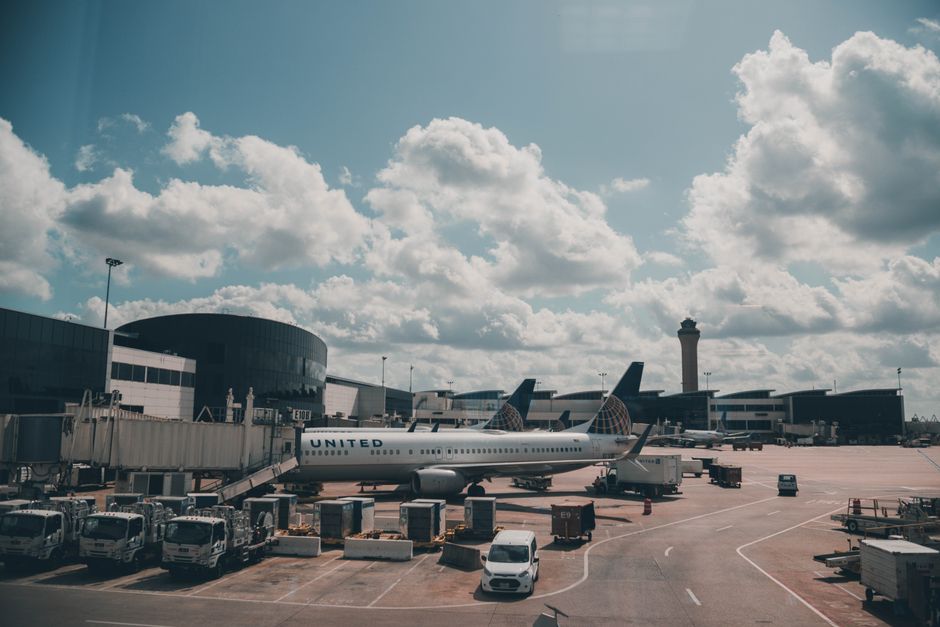
Let’s start with the lineup, because it is longer than most people expect. Air France is the hometown heavyweight, running up to six daily flights between Paris Charles de Gaulle and JFK, plus a seasonal service to Newark. Its business cabin on the Boeing 777-300ER is a solid reverse-herringbone seat with direct aisle access. Delta co-shares many of those Air France slots and flies its own JFK service with the Delta One suite, which I genuinely like for the door and the privacy. If you want the door and nothing less, that is the one to chase.
Then you have the Americans: United and American Airlines both fly from CDG, and American’s 777 business class is respectable, though I find its seat a notch behind the best in the sky. La Compagnie is the wildcard. This small French carrier flies an all-business-class A321neo from Orly to Newark. No first class, no economy, just 76 lie-flat seats. When the fare drops below 1,800 euros round trip, which happens more often than you would think, it is arguably the best value on the entire route.
One more thing worth knowing: Norse Atlantic and French Bee fly
 premium economy, not business, from Orly. I mention them because I have seen travelers book them expecting a lie-flat seat and land in a recliner. Read the cabin description before you pay.
How much should you actually pay?
Here are the numbers I have tracked on this route over the past two years, including fares I have personally booked or priced for friends. Round trip, business class, Paris to New York:
| Booking scenario | Typical round-trip price |
|---|---|
| Peak summer (July, August), booked late | 3,200 to 4,500 euros |
| Peak summer, booked 4 to 6 months out | 2,200 to 2,800 euros |
| November or February, booked in advance | 1,700 to 2,300 euros |
| Sale fare or error fare, any season | 1,300 to 1,600 euros |
| La Compagnie off-peak | 1,500 to 1,900 euros |
If you are paying more than 3,000 euros for a non-holiday departure, you are almost certainly booking too close to the flight. I have never seen last-minute business fares on this route come down. They only climb. That is the opposite of what happens in economy, and it surprises people every time.
When is the cheapest time to book?
My rule of thumb, built from a lot of spreadsheet sessions: book 90 to 160 days before departure for the transatlantic premium cabins. Inside 60 days, the fare you see is usually the fare you are stuck with. Outside 200 days, airlines have not yet loaded their competitive pricing, so you are seeing placeholder numbers.
Seasonality matters even more. The two cheapest windows on the Paris to New York corridor are early November (after the autumn holidays, before Thanksgiving traffic ramps up) and late January through February. I once flew Air France business in mid-February for 1,750 euros round trip, a fare that would have cost triple in July. The seat was identical. The lounge was emptier. Honestly, the plane felt half full in the back, and I counted nine empty business seats at takeoff.
Day of the week plays a smaller role than bloggers claim. What I do see consistently is that Tuesday and Wednesday departures price 5 to 10 percent below Friday and Sunday ones. It helps, but it will not rescue an expensive travel week.
Are points and miles worth it on this route?
Yes, and for many travelers this is the single smartest way to fly business class Paris to New York. The route sits right in the sweet spot of several award programs. Air France Flying Blue typically charges 50,000 to 70,000 miles one way in business between Europe and the US Northeast, plus around 150 to 300 euros in taxes and surcharges. Flying Blue also runs monthly Promo Awards, and Paris to New York shows up in those sales fairly regularly, sometimes at 40,000 miles one way. I have grabbed that price twice.
Transfer partners to know
- Amex Membership Points transfer to Flying Blue at 1:1, usually instant
- Chase and Citi points also transfer to Flying Blue and Virgin Atlantic
- Virgin Red points book Delta One via Virgin Atlantic’s program, often at fewer miles than Delta charges itself
- Avios (British Airways or Iberia) can cover American Airlines business, though you route through connecting cities
The Virgin Atlantic trick deserves a line of its own. Delta One from Paris to New York via Virgin Red can price around 47,500 points one way with low surcharges, while Delta’s own program wants 85,000 or more for the same seat. Award space on nonstop Delta flights out of CDG is decent, especially in the quieter months.
How does each cabin actually compare in the air?
Fare aside, the hard product differences matter on an eight-hour overnight flight. Here is my honest ranking after flying most of them.
Delta One wins on privacy, with a sliding door on the 767 and A330neo suites. Air France wins on soft product, the meal service and the lounge at CDG Terminal 2E Hall M, which has a proper bar and a Clarins spa treatment room. La Compagnie wins on simplicity and price, though its seat is slightly narrower and the Newark arrival is less convenient than JFK if you are heading into Manhattan on the AirTrain. The American and United offerings are fine, middle of the pack, nothing I would pay extra for.
One caution: Air France still flies some older 777s with an angled-flat business seat on a few frequencies. Not all flights, and the schedule does not always flag it. Check the aircraft type at booking, and if you see an older configuration, pick a different departure. I learned that one the hard way on a 10 pm JFK departure, and sleep did not happen.
Is upgrading at the airport a real strategy?
Sometimes, and I want to be precise here because this gets oversold. Air France offers paid upgrades at check-in and at the gate when the business cabin is undersold. I have seen CDG to JFK upgrades offered for 500 to 900 euros per person per direction. On a daytime flight, that is a fair deal for a comfortable arrival. On an overnight, it is genuinely good value compared with a 2,500 euro fare difference.
The catch: it is a gamble. You will not know until 90 minutes before departure, and your economy seat has already locked in. Never book economy expecting an upgrade. Book economy only if you are content to stay there.
Booking tips that actually save money
- Start from Orly as well as CDG. La Compagnie departs ORY and sometimes beats everyone by 500 euros or more.
- Check the US carriers’ own websites, not just aggregators. Delta and United sometimes hold back their cheapest business fares for direct booking.
- Look at open-jaw itineraries. Paris to New York, returning from Boston or Washington, can shave hundreds of euros and cost you a cheap train or bus leg.
- Set alerts on Google Flights for your exact dates and flexible ones three days either side. Business sale fares on this route often last under 48 hours.
- Consider positioning through Amsterdam or London. Odd, but KLM business to JFK via AMS from Paris has beaten the nonstop for me twice.
- Flying Blue Elite Plus members get occasional upgrade offers by email. Read them, they are sometimes 30 percent below the gate price.
Is business class worth it on this route at all?
Eight hours in the air, an overnight in the westbound direction, and a six-hour time change. That combination is the strongest case for business class on any short-haul intercontinental route in the world. You land at JFK around noon local time having actually slept horizontally, and you salvage your first day in New York instead of losing it to a fog of fatigue. For me, on trips shorter than four days, that first day is the trip. I will pay for it or burn miles for it without much hesitation.
If your trip is two weeks long, the calculus weakens. A rough arrival costs you one day out of fourteen, and economy on Air France with a decent exit row seat is 900 euros cheaper. I would skip premium there and put the money toward restaurants. Everyone draws this line in a different place, and neither answer is wrong.
Quick FAQ
How long is the flight? Westbound Paris to New York runs about 8 hours 15 minutes. Eastbound is faster, usually 7 hours or a touch under, thanks to the jet stream.
Which lounges can business passengers use at CDG? Air France business passengers get the lounge in Terminal 2E (Hall L or M depending on the flight). SkyTeam partner passengers usually get access too. Delta One flyers leaving JFK use the Delta One lounge, which opened in 2024 and is honestly one of the best lounges in the US.
Do business fares include seat selection? On Air France and Delta, yes, all business seats are free to select at booking. Some US carriers still charge for preferred business seats near the front, annoying but avoidable if you book early.
The short version: pick your season before you pick your airline. A 1,700 euro fare in February on an airline you mildly like beats a 3,500 euro fare in July on your favorite one, and the bed is the same width either way.