Is renting a car in Antwerp actually worth it?
Honest answer: it depends on what you plan to do. I have been to Antwerp half a dozen times, sometimes by train, sometimes with a rental, and the difference is night and day depending on the trip. Car rental in Antwerp makes a lot of sense if you are heading out of the city, say to the Meuse valley, the WWI battlefields around Ypres, or a hop over the Dutch border to Rotterdam. Inside the city itself, the historic centre is compact, trams are excellent, and parking will eat €2.50 to €4 per hour in most blue-zone and underground car parks.
So my rule of thumb is simple
 . Two days of museums and dining along the Scheldt? Skip the car. A week touring Flanders with Antwerp as your base? Rent one, and rent it from the right place, which I’ll get to below.
How much does car rental in Antwerp cost?
Prices fluctuate with the seasons, but here are figures I have seen repeatedly when comparing rates. In low season (November through February, minus the Christmas market weeks) you can find an economy car from around €28 to €35 per day with the budget players. Summer and June’s busy weeks push the same category to €45-60. A compact automatic runs €55-80 daily in high season, and automatics are scarcer and pricier than manuals all across Belgium, since most local drivers learn on manuals.
A one-week economy rental booked two months ahead typically lands between €180 and €260 all-in if you dodge the counter upsells. Book the same car three days before arrival and you can easily pay double. That last-minute penalty is real in Antwerp, especially around fashion week and the big trade fairs at Antwerp Expo.
| Car type | Low season (per day) | High season (per day) |
|---|---|---|
| Economy (manual) | €28-35 | €45-60 |
| Compact automatic | €45-55 | €55-80 |
| Estate / compact SUV | €50-65 | €65-95 |
| 7-seater van | €80-110 | €110-160 |
These are ballpark figures from the usual aggregators and a few direct operator sites. Fuel is not included, and diesel has hovered between €1.55 and €1.80 per litre in recent years, with petrol slightly cheaper. Belgium is small, though. Antwerp to Ghent is about 60 km, Brussels 50 km, Bruges 95 km. Even a full week of Flanders touring rarely burns more than one and a half tanks.
Where should you pick up the car?
You have three main options, and they suit different trips.
- Antwerp Airport (Deurne) is tiny and sits just 5 km from the centre. A few operators have desks there. Handy, but selection is thin and daily rates run a bit higher.
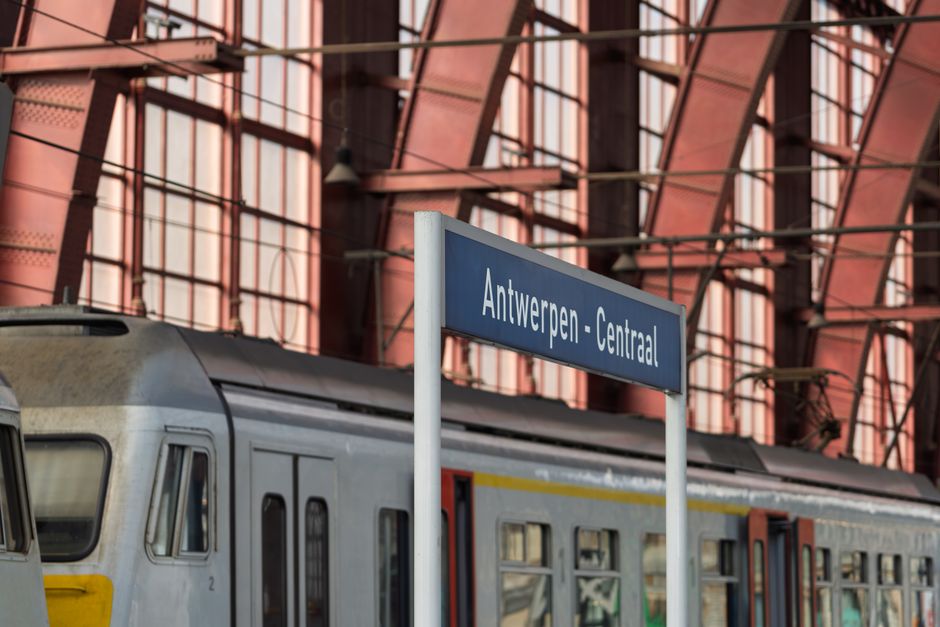
- Antwerp Central Station and its surrounding streets host most of the big brands. If you arrive by train from Brussels or Amsterdam, this is the smoothest handover point.
- Brussels Airport has the widest fleet and often the lowest rates, roughly 45 km away. Worth comparing if your flight lands there anyway, but the drive into Antwerp includes the notoriously congested R1 ring, so factor in 45-70 minutes depending on traffic.
My personal preference is the station area. You step off the train, walk ten minutes, and you are driving. One warning: several cheaper operators around the station use small satellite lots, so check whether the desk is actually at the address printed on your voucher before you go.
Which rental companies operate in Antwerp?
The lineup includes the global names, Europcar, Sixt, Hertz, Avis, plus budget operators like Keddy (Europcar’s low-cost line) and various local brokers. Enterprise has a solid presence around the station quarter too. Sixt and Europcar generally score best on fleet age and cleanliness in Belgian reviews. The budget brokers are cheaper but reviews frequently mention long waits at pickup and pushy insurance pitches at the counter.
I am not going to pretend the big brands are flawless. I once waited 40 minutes at a major brand’s desk in Antwerp on a Monday morning because two staff called in sick. But in my experience the cheaper outfits have a higher chance of arguing over small dents at return, which brings me to the part most people skip.
Insurance, deposits and the excess trap
Here is where car rental in Antwerp gets expensive if you are careless. Belgian rentals come with basic third-party cover by law, but the excess (the amount you owe if the car is damaged) can be €900-1,500 on economy cars and higher on vans. Two ways to protect yourself:
- Buy the rental company’s full waiver at the counter, typically €12-20 per day. Convenient, expensive over a week.
- Buy a standalone excess policy before you travel, roughly €6-9 per day or about €40-60 for an annual multi-trip plan. You still pay the operator’s excess if something happens, then claim it back.
Go with option two if you rent more than a couple of times a year. Also note the deposit. Expect a credit card hold of €200-400 for standard cars. Debit cards are increasingly accepted by some operators but not all, and prepaid cards are almost universally refused. Check the payment terms before you book, not at the desk at 9pm after a delayed flight.
Photograph the car from every angle at pickup and drop-off. It takes three minutes and has saved me a disputed €250 scratch charge in the past. This habit is worth more than any advice in this article.
What are Belgian driving rules you should know?
Belgium drives on the right, and the motorway limit is 120 km/h, dropping to 100 km/h in rain on many stretches. Urban areas are 50 km/h, sometimes 30 km/h in residential zones, and Antwerp has been rolling out more 30 zones aggressively. Fines are steep and speed cameras are common, including average-speed checks on motorways.
A few things that catch visitors out:
- Priority from the right still applies at some unmarked intersections in older neighbourhoods. Look for the orange diamond sign that cancels it.
- The Antwerp ring (R1) and the Liefkenshoek tunnel are congested at rush hour. Avoid 7:30-9:00 and 16:30-18:00 if you can.
- Reflective vests are mandatory in the car and you must wear one if you step out on a hard shoulder.
- Low emission zones: Antwerp’s LEZ covers the inner city. Most modern petrol cars from 2014 onwards pass, but older diesel vehicles need to check and possibly pay. Foreign drivers should register if their plate isn’t automatically recognised.
Parking in the centre uses a mix of blue-zone disc parking (free but time-limited) and paid underground garages. TheParking under Groenplaats and the underground lots near the station run €2.50-4 per hour, with day rates around €18-25. Street parking outside the ring is cheaper and often free, then you tram in.
One-way rentals and cross-border trips
Planning to pick up in Antwerp and drop off in, say, Brussels Airport or Ghent? One-way fees within Belgium usually run €30-75 depending on distance and company. Cross-border drop-offs get pricey fast. Returning a car in the Netherlands might add €100-200, and one-way rentals into France or Germany cost more still.
Driving the rental into neighbouring countries is generally fine, since Belgium sits inside the EU’s open borders. Most operators allow unlimited travel within the EU, but tell them in advance and get it noted on the contract, especially for vans and premium cars, which sometimes carry country restrictions. Crossing into non-EU countries, like the UK post-Brexit, is a different matter and needs explicit written permission.
Quick FAQ
Do I need an international driving permit?
EU and most Western licences are fine as-is. If your licence is in a non-Latin script (Japanese, Arabic, Chinese), carry an IDP alongside it. Drivers from the UK, US, Canada and Australia need only their national licence, though an IDP never hurts as backup.
What is the minimum age?
Most companies require 21, with a young-driver surcharge for under-25s, typically €10-15 per day. Some premium categories start at 25. Vans often require 23 or older.
Is fuel better bought in the city or on the motorway?
Motorway stations are usually 10-15 cents per litre more expensive. Fill up at a supermarket station like Carrefour or Colruyt before returning the car. Colruyt’s fuel prices are famous in Belgium for being consistently low.
Manual or automatic?
If you can drive manual, book manual. It is cheaper and the fleet is bigger. If you need an automatic, book early, because Antwerp’s automatic supply is limited and genuinely does sell out in July.
The takeaway
Book two months ahead, pick up near Central Station unless your flight lands in Brussels, refuse the counter’s excess cover in favour of a standalone policy, and photograph every panel at both ends of the rental. Do those four things and car rental in Antwerp becomes the cheapest, least stressful part of your trip rather than the story you complain about at dinner.