Car rental in Paris looks cheap until you read the fine print. I have rented cars in and around the French capital maybe a dozen times over the past eight years, sometimes for airport pickups, sometimes for weekend escapes to Normandy, and the price on the booking site has never once been the price I actually paid. Sometimes it came out cheaper. Once, at Orly, it came out 140 euros more because of a fuel policy I did not catch. This article is the guide I wish someone had handed me the first time.
Let me say the uncomfortable thing up front: if you are staying inside Paris proper for a whole trip, you probably should not rent a car at all. The metro is faster, parking runs 3 to 5 euros per hour in the central arrondissements, and the périphérique at rush hour is a special kind of misery. The real case for car rental in Paris is the city as a base. You land, you spend three days walking around Le Marais, then you pick up a car and go see Giverny, Reims, or the Loire. That is where a rental earns its keep.
How much does renting a car in Paris actually cost?
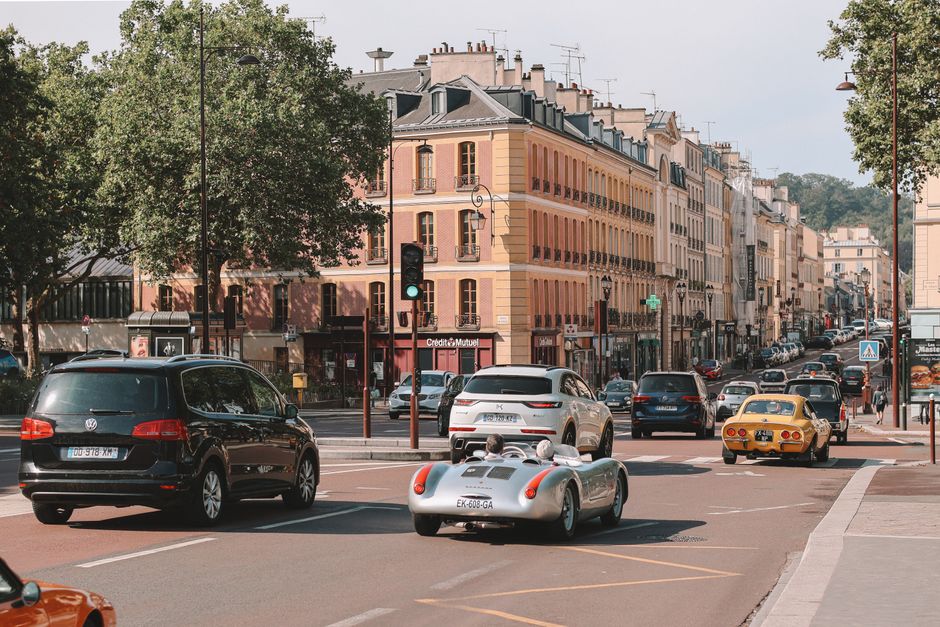
Ballpark figures, based on bookings I have made or priced out recently: an economy car like a Renault Clio or Peugeot 208 starts around 25 to 40 euros per day if you book two or three weeks ahead. Compact automatics, which most American visitors want, run 45 to 70 euros. In August, when half of Paris empties out on vacation, and again around Christmas, prices spike hard. I once paid 38 euros a day for a diesel Clio in February and saw the same car listed at 95 euros a day in mid-July.
Then come the extras, and this is where budgets die. A GPS is pointless, your phone does that, but a second driver fee can add 10 to 15 euros per day at some counters. Child seats cost 8 to 12 euros daily,
 which adds up fast, and honestly you can buy a decent booster at a Decathlon outside the city for 25 euros. Cross-border fees apply if you drive into Germany or Spain, usually 30 to 50 euros flat.
Where should you pick up your rental car?
This is the decision people get wrong most often. There are four main options and they suit different trips.
- Charles de Gaulle (CDG): biggest selection, best prices usually, but a 45-minute drive into the city before you even start. Great if you are heading straight out to Champagne or Belgium.
- Orly (ORY): closer to the city, decent inventory, often 5 to 10 percent pricier than CDG for the same car.
- City center offices: scattered around the 15th, 17th and near Gare de Lyon. Ideal for the sightseeing-then-road-trip plan, but small fleets mean the car class you booked may be swapped.
- Train station desks: Gare du Nord and Gare de Lyon, useful if you arrive by Eurostar and want to drive out immediately. Crowded, and queues can take 40 minutes on Saturdays.
My habit is CDG on arrival, city center on return, so I never touch the car in Paris traffic at all. One-way fees between locations within Paris are usually zero or small, around 25 euros, but ask before you pay.
Which rental companies are worth booking with in Paris?
The big European names, Sixt, Europcar, Hertz and Avis, are all over the city and the airports. Enterprise and its French sibling, goldcar rival Sixt budget line, sit in the middle. Then you have the low-cost French players, Rent A Car (yes, that is literally the brand name) and Autolib successors like Getaround for peer-to-peer hourly hire.
My honest ranking for visitors: Europcar for reliability at French locations, Sixt for nicer cars if the price is close, and Avis if you have status or corporate rates. Rent A Car can be half the price and I have had two fine experiences and one nightmare involving a two-hour wait in Rungis. You get what you pay for, mostly.
Should you use a broker site or book direct?
Brokers like Rentalcars and DiscoverCars will usually undercut direct booking by 10 to 20 percent, and they offer full-coverage packages that are dramatically cheaper than the excess waiver sold at the counter. The counter staff in Paris are trained hard to push that waiver, often 20 to 30 euros per day, and they will tell you your credit card coverage is not valid in France. Sometimes they are right! Check whether your card actually includes collision coverage abroad, many US premium cards exclude certain vehicle classes. I book through a broker and take their coverage, then decline everything at the desk. It has saved me hundreds of euros.
What documents and requirements do you need?
France is stricter than it used to be, and the requirements are not optional:
- A valid driver’s license held for at least one or two years depending on the company. Non-EU licenses are generally fine in English, but an International Driving Permit is cheap insurance for 20 dollars if yours is not in the Latin alphabet.
- A credit card in the main driver’s name. Debit cards are accepted by some companies now, but the deposit hold, usually 200 to 1,500 euros, lands on that card, and it lingers for up to two weeks after return.
- Your passport and booking voucher.
- Minimum age is 21, with young driver fees of roughly 25 to 35 euros per day for drivers under 25.
Driving in Paris: the rules that catch tourists out
Paris driving is not as terrifying as its reputation, but a few local quirks cost people real money. The speed limit inside Paris dropped to 30 km/h citywide in 2021, and lots of radar vans enforce it. On the périphérique it is 70. Speed camera tickets follow the rental company back to you, with an admin fee of 25 to 45 euros attached, and they arrive at your home address months later through a French collection agency. It is unpleasant.
Crit’Air stickers are the thing nobody knows about. Low-emission zones (ZFE) now restrict older vehicles in Paris and more than a dozen other French cities. Rental fleets are almost always Crit’Air 1 or 2 compliant, so a modern rental is fine, but if you rent privately through a peer-to-peer app, check the sticker on the windshield before you commit. And on alternate driving days during severe pollution events, even compliant cars can face restrictions, though that is rare.
Parking deserves its own warning. Street parking in central arrondissements uses the Paris Voiture app or meters at roughly 3 to 6 euros per hour with two-hour maximums in many zones. Underground public garages cost 25 to 45 euros per day. Hotel parking, if it exists at all, is frequently 35 to 55 euros per night, which can quietly exceed the daily rate of the car itself.
Tolls and fuel outside the city
Once you leave Paris, French autoroutes are mostly tolled. Paris to Reims is about 12 euros each way. Paris to Bordeaux runs close to 55 euros in tolls alone. Diesel and 95 petrol hovered around 1.75 to 1.95 euros per liter in recent months, so a full tank on a Clio is 80-plus euros. Fill up before returning, and photograph the fuel gauge and the odometer. That photo settled a dispute for me at the Europcar desk at Porte de Vincennes in 2022, no joke.
Is it cheaper to rent a car or use the train from Paris?
Worth doing the math, because the TGV is genuinely excellent. Two people, round trip, Paris to Reims by train: about 50 euros total on a smart booking, 46 minutes each way, no tolls, no fuel, no parking. The same trip by rental car costs roughly 60 euros in tolls and fuel plus the car itself. The train wins.
Now try the Loire Valley. A train gets you to Tours, but the châteaux are scattered across countryside with patchy buses. Here the car wins decisively, and the drive down the A10 past Chartres is part of the pleasure. Four people traveling together tilts almost every comparison toward the car, since train fares multiply per person and rental costs mostly do not.
Quick answers to common questions
Can I drive in Paris with a US or UK license?
Yes. UK licenses are fine as they are. US licenses are accepted in English for tourist visits, though an IDP costs almost nothing and smooths things over if you get stopped. Remember to carry it in any case, because French police do conduct routine checks.
Is it hard to find automatic cars in Paris?
Harder than in the US, easier than it was five years ago. France was historically a manual country, and fleets reflect that. Automatics are maybe 30 percent of availability and cost 20 to 50 percent more. Book early, and if the site shows only manuals, call the location directly a week before pickup, cancellations free up automatics regularly.
What about electric rentals?
Paris has solid charging infrastructure, over 20,000 public charge points across Île-de-France, and companies like Hertz and Sixt now push EVs such as the Tesla Model 3 or MG4 at decent rates. Fuel savings are real if you charge overnight. The catch is charging on rural road trips, where a fast charger can still mean a 40-minute coffee stop. I would only take an EV for city-plus-suburbs trips, not a big loop to Normandy.
The takeaway
Rent in Paris for the places the trains do not reach, not for Paris itself. Book an automatic three weeks out through a broker with zero-deductible coverage, pick up at CDG or a station desk, photograph everything at pickup and return, and budget roughly 45 to 70 euros per day all-in for a compact plus another 40 to 60 euros in tolls and fuel for a typical two-day loop. Skip the counter upsells, respect the 30 km/h limit, and the whole thing runs smoothly. The one time I ignored my own checklist, it cost me 140 euros. Learn from my Orly receipt.