I’ll be honest with you upfront: most visitors to Interlaken do not need a car. The trains here are absurdly good. But after three trips to the Bernese Oberland, I’ve rented twice anyway, and both times I was glad I did. Car rental in Interlaken Switzerland makes sense if you want the small stuff, the gravel-road viewpoints, the villages the buses skip, and the freedom to leave at 6 a.m. before the tour buses climb Grindelwald. This guide covers what it actually costs, where to rent, and the things nobody tells you about driving in this part of Switzerland.
How Much Does Car Rental in Interlaken Actually Cost?
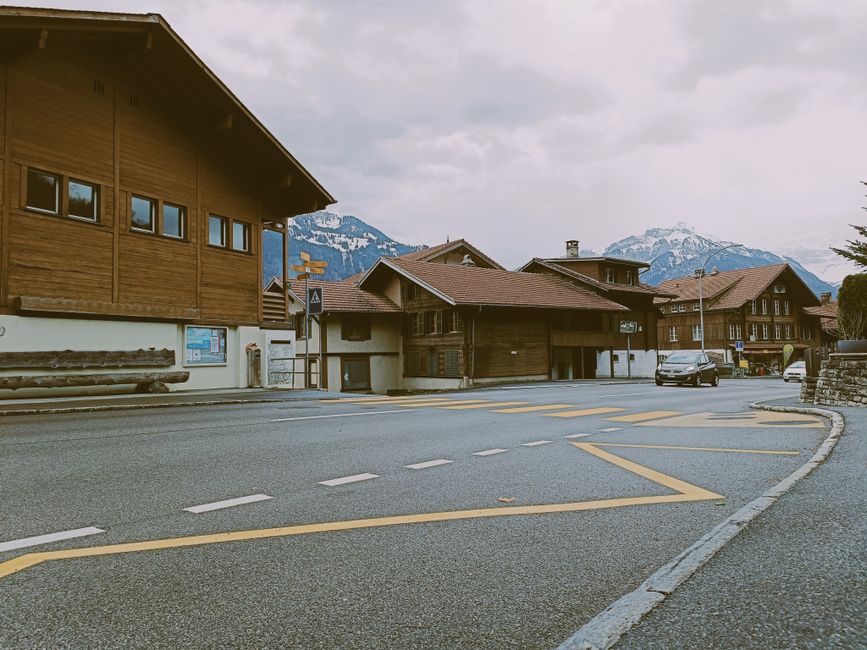
Expect roughly CHF 45 to CHF 70 per day for a compact car in summer if you book two or three weeks ahead, and more like CHF 90 to CHF 130 in peak season (July, August, and the Christmas weeks). I’ve seen a Volkswagen Golf from Europcar at Interlaken Ost come in at CHF 58 a day in June, then nearly double in August for the exact same car. That’s not a scam, that’s Alpine supply and demand.
Winter pricing is its own animal. Rates can drop to CHF 40 a day in November, but you’ll be paying CHF 15 to CHF 25 extra per day for winter tires, and that’s not optional. More on that below.
Where to book
There’s no airport in Interlaken, so all the rental desks are in town. You’ve got a handful of options:
- Europcar, near Interlaken Ost station
- Hertz, on Höheweg, the main drag
- Avis/Budget, also close to the west station
- Local independents, which sometimes beat the big brands by 10-15% if you book directly by phone or email
My advice: com
 pare the big aggregators first, then check the local companies directly. In 2023 I saved about CHF 90 on a five-day rental by calling a small operator near Matten instead of booking through a third-party site. It took ten minutes.
Do You Even Need a Car in Interlaken?
Depends on your trip, and I mean that genuinely. If your plan is Jungfraujoch, Lauterbrunnen, Grindelwald and Harder Kulm, the train and cableway network covers all of it, often faster than driving because you skip parking entirely. The Swiss Travel Pass even covers most of it.
Rent a car if any of these apply:
- You want to drive the Grimsel Pass and Susten Pass, two of the most spectacular roads in Europe, which sit an hour or so away and are genuinely painful to reach by public transport
- You’re doing day trips to Lucerne, Gruyères or the Kander valley and don’t want to live by the timetable
- You’re traveling with kids and gear, and hauling ski bags through four train changes loses its charm fast
- You’re staying somewhere remote, like a chalet above Wilderswil or a farm stay in Saxeten
If none of those fit, put the money toward a rail pass and take the cogwheel train up the Jungfrau like everyone else. You’ll thank me when the fog rolls in.
What You Need to Rent a Car in Switzerland
The basics are simple. You need a valid license held for at least a year, a credit card in the driver’s name for the deposit (usually CHF 500 to CHF 1,000 blocked on the card), and you must be at least 20 or 21 depending on the company, with young-driver fees for under-25s typically running CHF 15 to CHF 30 per day.
Non-EU license holders, including Americans and Brits, don’t need an International Driving Permit for Switzerland, though I’d get one anyway since you might cross into Italy or France on a whim. The vignette for motorways (CHF 40) is almost always already on the rental car, but check. Police spot-check rental cars near the Gotthard and the fines are steep.
Winter Driving: The Part That Catches People Out
From roughly November 1 to March 31, Swiss law requires winter tires in wintry conditions, and rental companies in Interlaken will sell you a winter package whether the law technically demands it or not. Roads to Grindelwald and Mürren get snow early, sometimes in October. I once watched a family in a summer-tired compact car slide sideways into a snowbank outside Lauterbrunnen in late October. They were fine, the car was not, and their excess was CHF 1,200.
Which brings up the thing that matters more than the daily rate: your deductible.
Understanding the excess
Basic rentals in Switzerland carry a collision damage excess of CHF 1,500 to CHF 3,000. That’s a real number, not fine print. Narrow mountain roads, stone walls, and rockfall mean windscreen and body damage claims are common here. You can reduce the excess to zero at the desk for CHF 20 to CHF 35 a day, which feels expensive until you’re staring at a scraped door in Kandersteg. Alternatively, a standalone excess insurance policy from a third party costs around CHF 5 to CHF 9 a day. I use one and it’s saved me money on every rental over a week long.
One more winter detail
Some mountain roads, including the access road to Mürren (Schiltalp) and certain passes, are closed all winter or require chains. If the sign says Ketten obligatorisch and you don’t have chains, you turn around. No exceptions, and the rental contract won’t cover you if you ignore it.
The Best Day Trips from Interlaken by Car
Since you’re renting anyway, here’s where the car genuinely beats the rails. The Susten Pass (open roughly June to October) runs from Wassen to Innertkirchen and takes about 50 minutes of pure switchback joy. The Grimsel Pass, with its dam-studded moonscape, branches off toward Gletsch and connects toward the Furka Pass, the road from Goldfinger. Drive all three in a loop and you’ve done one of the great driving days in the Alps, call it five hours with stops.
Closer to home, Lake Brienz is better by car than by train. Stop at Giessbachfälle (the funicular hotel waterfall), then carry on to Iseltwald, that tiny peninsula village that Korean drama fans started flooding after “Crash Landing on You” filmed there. Parking is tight and costs a few francs. Get there before 10 a.m. in summer.
Southbound, Kandersteg and the Oeschinensee are a 40-minute drive. The cable car saves you a 30-minute uphill hike, but arrive early, the lot fills by 9:30 in July.
Parking in Interlaken: Small but Manageable
Blue zones in town give you 90 minutes with a parking disc. White zones are paid, usually CHF 1.50 to CHF 2.50 an hour. Most hotels charge CHF 10 to CHF 20 per night for a spot, and some older guesthouses have none at all, so confirm before you book the room. The Kyburg parking garage near the center was around CHF 16 a day last time I used it, which is fair for a tourist town squeezed between two lakes.
One thing worth knowing: parking in Grindelwald and Lauterbrunnen is expensive and limited in high season, sometimes CHF 15 to CHF 20 a day at the valley lots. If you’re headed up anyway and parking looks grim, park at Wilderswil and take the cog railway. Cheaper and calmer.
Common Questions
Is it cheaper to rent in Interlaken or Bern?
Bern, usually, by 10 to 20 percent, because airport-adjacent city locations have more fleet competition. But factor in the train fare and the hour of your life spent getting there and back. Unless you’re renting for a week or more, local pickup usually wins.
Can I take the rental car into Italy or Austria?
Generally yes, but tell the company first. Cross-border fees are rare in Switzerland but some categories (vans, luxury cars) carry restrictions, and you’ll need your own vignette or motorway toll arrangement for the neighboring country.
Are automatic cars available?
Yes, but they’re a minority of the fleet and cost CHF 10 to CHF 20 more per day. Book an automatic weeks ahead if you can’t drive stick, or you’ll be upgrading at the desk at premium prices.
Fuel, Speed Cameras and Other Swiss Realities
Petrol sat around CHF 1.75 to CHF 1.90 per litre on my last visit. A full tank for a compact runs CHF 80 to CHF 95, and most rentals come with a full-to-full policy, so ignore the prepaid fuel offers, they’re priced above pump rates.
Speed cameras are everywhere and they’re not hidden red herrings, they’re calibrated and merciless. The motorway limit is 120 km/h, single-carriageway main roads are 80, and villages drop to 50 the moment you see the sign. Fines arrive at your rental company, who charges an admin fee of CHF 30 to CHF 50 on top. Keep an eye out, especially on the lake roads between Interlaken and Thun, where the limit changes constantly.
Also: Swiss drivers flash their headlights if you’re blocking the passing lane on a mountain road. Take the hint, pull into the next layby. It’s not aggression, it’s just how things work here.
The Bottom Line
Book a compact two to three weeks out, decline the desk’s excess waiver in favor of a standalone policy, take the winter tire package from November to March without arguing, and budget roughly CHF 60 to CHF 75 a day all-in for a summer rental including fuel for day trips. If you’re only doing the Jungfrau region’s headline sights, take the train instead and put the savings toward dinner at a lakefront terrace in Iseltwald. But if the passes are open and the sky is clear, get the car. Some roads in the Bernese Oberland are worth the whole trip on their own.